



Champions League: Juventus vs Benfica! With 6 to 7 key players injured, why am I still hopeful for Juventus?

14/02/2026 12:09:49 悦悦
 0
0  104
104Today’s first topic is the Champions League match: Juventus vs Benfica!

This high-profile game is interesting because the two teams have completely opposite playing styles.
Juventus likes to hold on stubbornly till the very end, whereas Benfica fights with a relentless, all-out approach. What will happen when these two meet?
Benfica’s coach Schmidt should be well-known to many, having coached Beijing Guoan for two years.
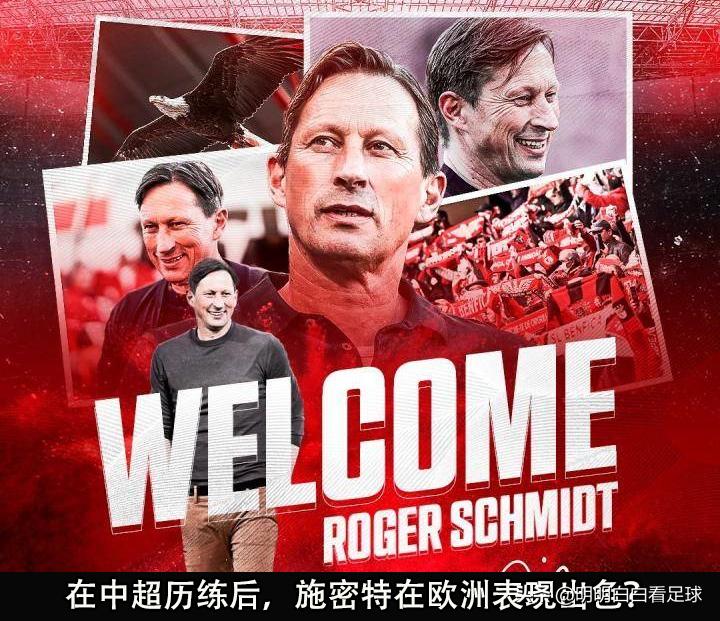
Since arriving at Benfica, his style has been extremely aggressive. Just look at their formation.
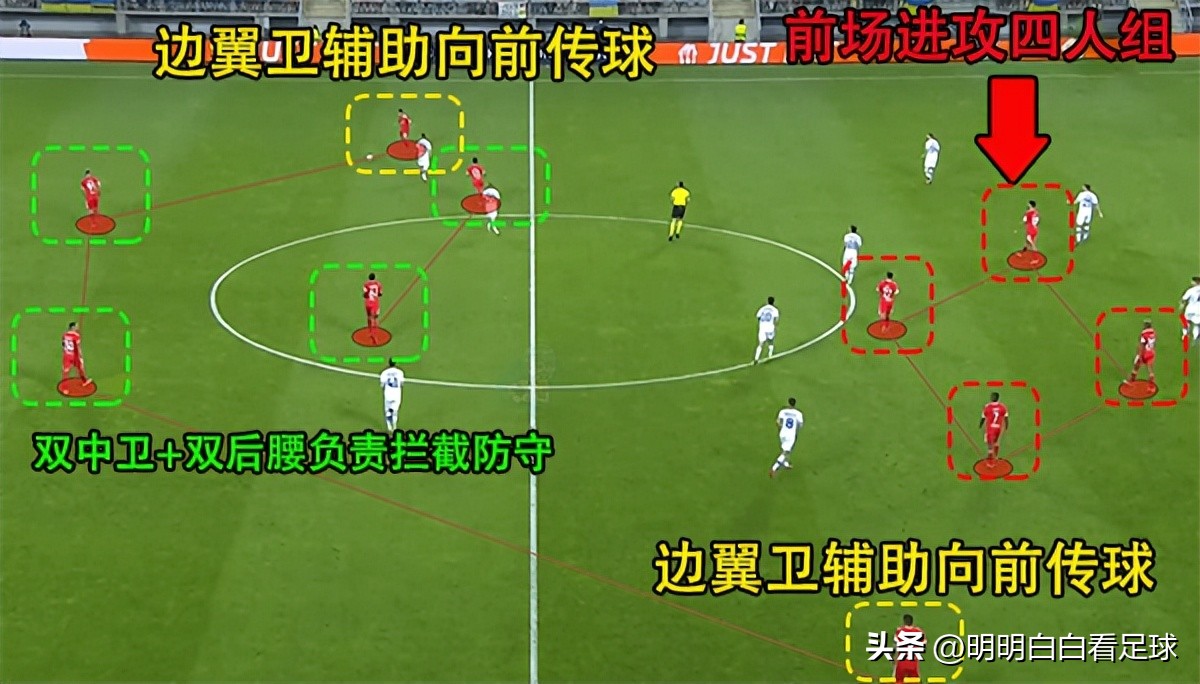
The front four form a coordinated diamond shape, and calling them four forwards wouldn’t be an exaggeration.
The fullbacks push forward to act almost like wingers. Most of the time, the defense relies only on two center-backs plus two defensive midfielders, which led Portuguese media to nickname it “all-in football.”
The image below clearly shows their average positioning and passing connections.
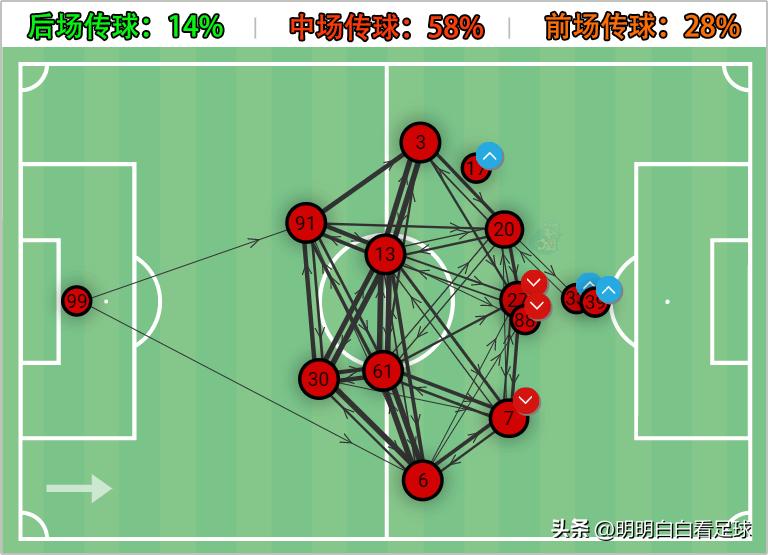
You can see their overall formation is very advanced, heavily concentrated in the midfield and forward areas. Their midfield pressing is extremely intense in this match.
Teams like Barcelona or Ajax, who prefer to control possession in midfield, struggle against Benfica, often exhausting most of their energy in the middle without creating sharp attacks.
Last season, Benfica managed a win and a draw against Barcelona and even knocked out the then-dominant Ajax.
But Juventus isn’t affected by this approach because they don’t rely on midfield to launch attacks.
A classic example is their formation against Sampdoria.
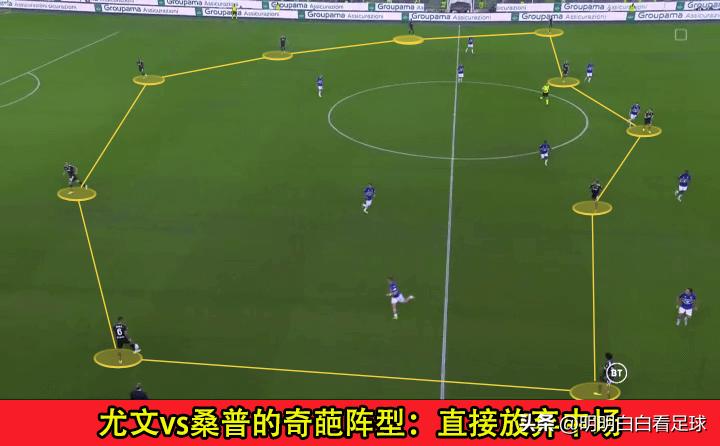
Ten Juventus players form a large circle, leaving the middle completely open without a single player inside.
Why is there no one in midfield? Because their midfield is weak.
After injuries to key midfielders like Pogba and Locatelli, who are Juventus’s three starting midfielders now?
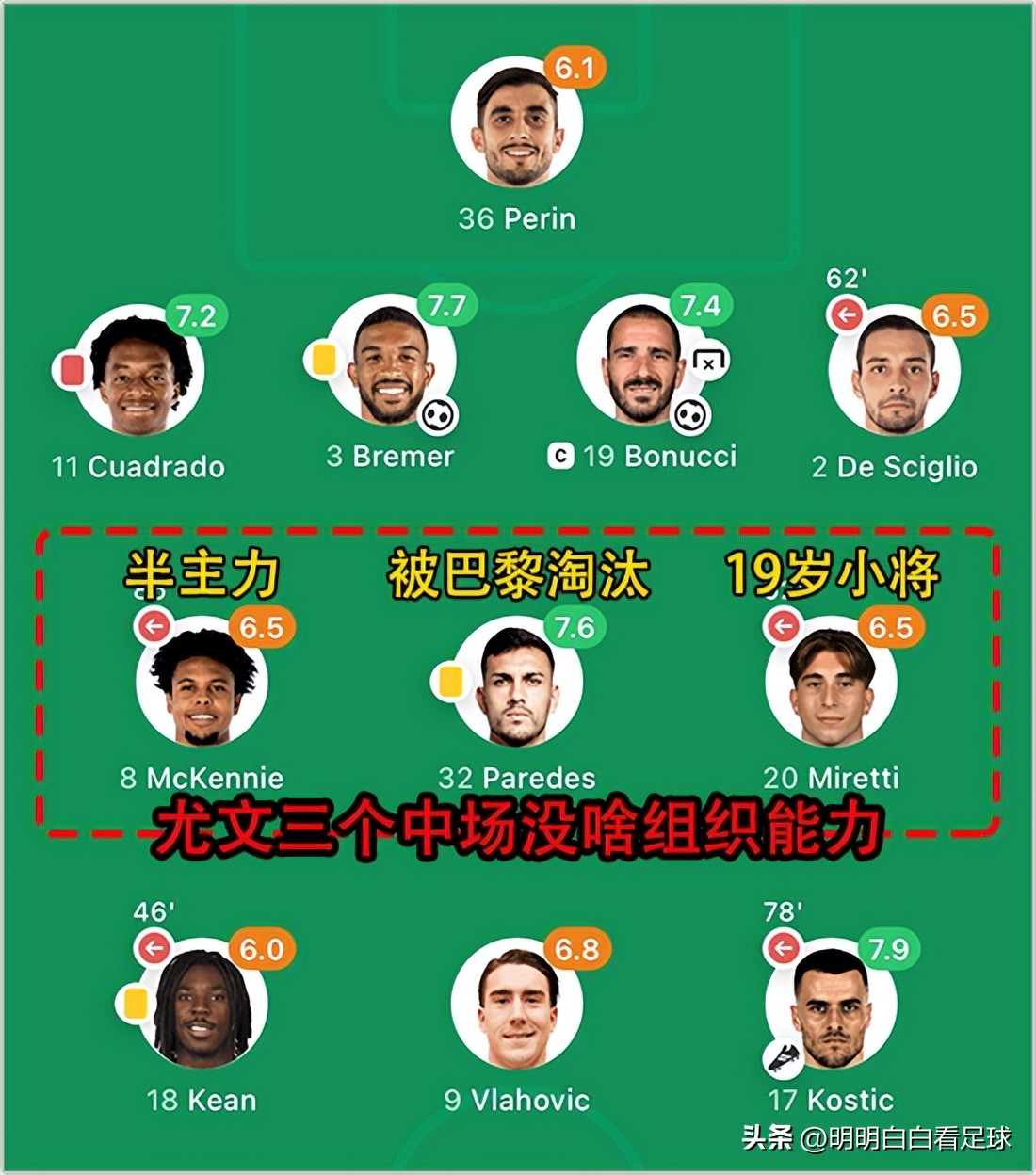
There’s Paredes, discarded by PSG; McKennie from the USA; and 19-year-old Miretti... These are all workhorse-type midfielders good at defensive tasks, but when it comes to passing, controlling, and organizing attacks, sorry, they lack that skill.
Allegri knows they can’t control the midfield, so he simply gives up on it and opts for long balls. In the last league game, Juventus played 15 long passes just to feed Vlahović.
A weak midfield is definitely a disadvantage, not a strength.
This causes Juventus to become very rigid when facing weaker teams that sit back and deny them counterattack space.
But against an aggressively attacking team like Benfica, this might not be such a big problem.
Juventus’s workhorse midfielders may be weak offensively but are decent defensively.
For example, Paredes is a mainstay defensive midfielder for Argentina. It was after Scaloni used him to cover Messi’s defensive weaknesses that Argentina’s results improved.
If Juventus can successfully defend against Benfica’s attack, they will have counterattack opportunities.
Benfica has two main attacking weapons.
One is their fierce man-to-man pressing high up the pitch.
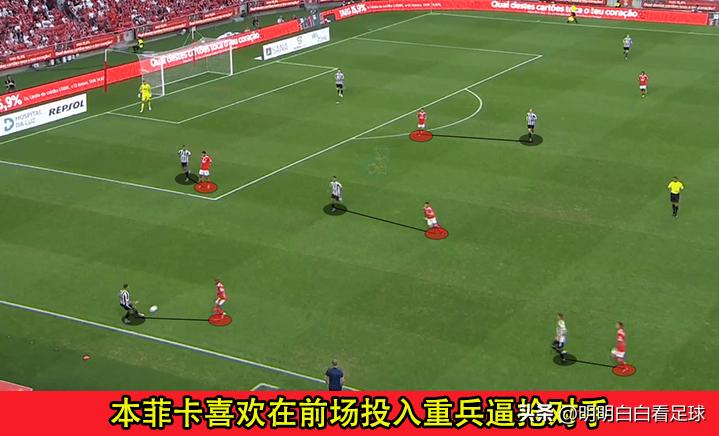
Often, four or five players rush into the opponent’s area hoping to win the ball back immediately and launch a quick counter.
But Juventus’s backline is very stable in possession. Roma also tried intense pressing upfront, but Juventus always managed to pass safely out, wasting Roma’s energy.

Benfica’s second weapon is crossing.
Their striker Ramos is an excellent target man in the box; as long as the ball gets into the area, his scoring efficiency is very high. In the first game of this season, he even scored a hat-trick from crosses.
However, Juventus excels at defending top strikers, like in their matches against Roma.
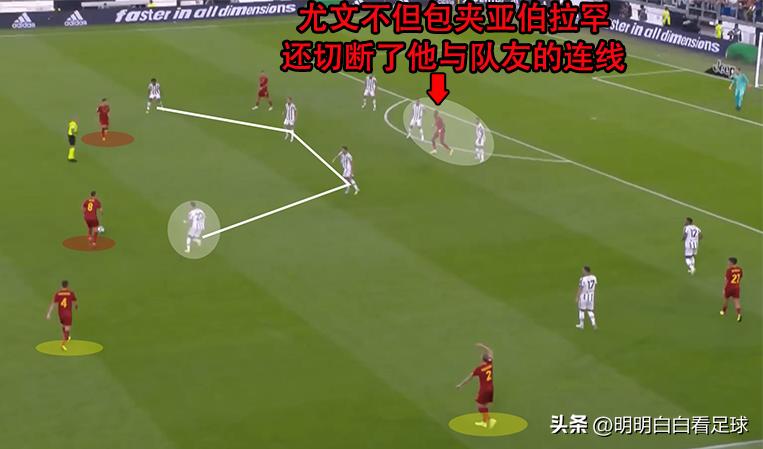
They assigned two players to mark Abraham tightly throughout the game and set up a defensive line to cut off his connections with teammates, effectively boxing him in. Want to shoot from distance? Go ahead. Want to cross? Dream on.
As a result, Abraham had only 29 touches—the fewest on the pitch—and lost 11 duels, the most in the match.
Overall, Juventus’s weaknesses might not be weaknesses against Benfica, and Benfica’s strengths might not be strengths against Juventus. Their tactical styles somewhat counter each other.
Additionally, Juventus’s coach Allegri is famous for the Champions League. Between 2015 and 2017, he led Juventus to two finals in three years.
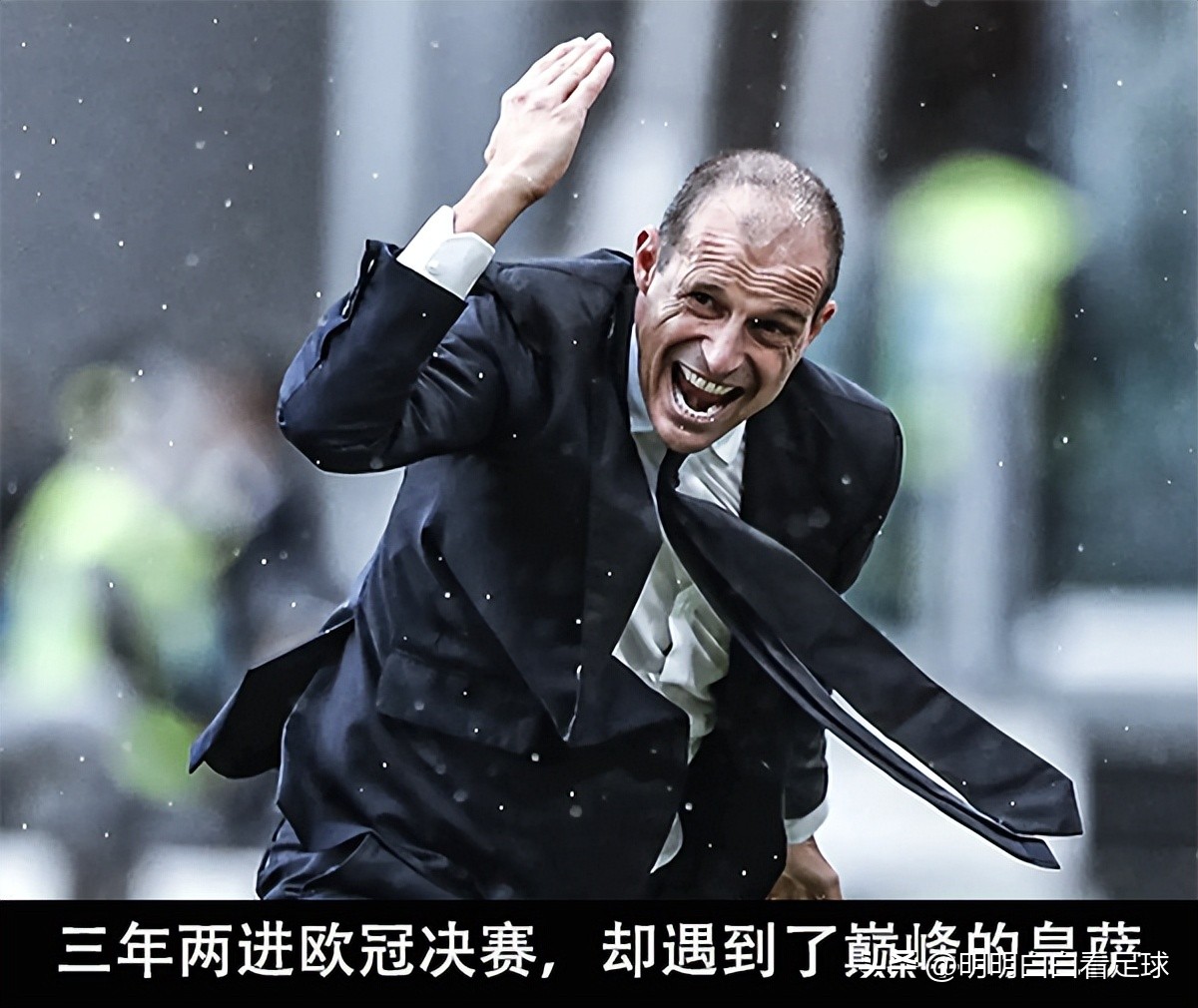
If he hadn’t eliminated the peak Real Madrid in 2015, Juventus might have won five consecutive Champions League titles.
If he hadn’t knocked out the Messi-Neymar-Suárez Barcelona in 2017, Neymar might have stayed.
His conservative counter-attacking style is quite effective in cup competitions.
Now he has rich Champions League experience; among current coaches, he ranks tied third in the number of Champions League matches alongside Klopp.
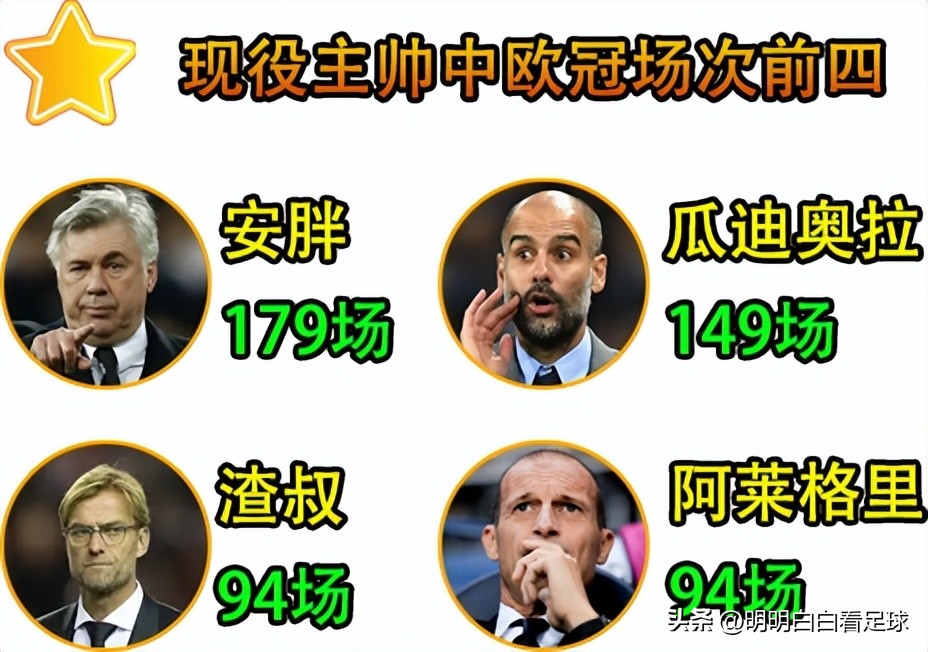
In contrast, Schmidt’s Champions League experience is much more limited.
Although Juventus’s current form is poor and injuries are many, experience still matters in crucial tournaments.
What do you think? Can Juventus satisfy their fans today? I, Xiaojiu, hope they take all three points.
Alright, for other matches today, I will still send text analysis in the evening. If you have any questions, feel free to ask me. Let’s watch the games and understand them together—see you then!
If you like it, please tap to follow and like!


Wonderfulshortvideo

mbappe news mbappe edit mbappe new shoe boot deal mbappe nike



julian alvarez barcelona news
James Trafford’s big moment in the U21 EURO final 🤯
RODRI BARCELONA transfer barcelona news today rodri to barcelona transfer here we go
gianni infantino and trump drama news

jorge messi death messi news today football news today
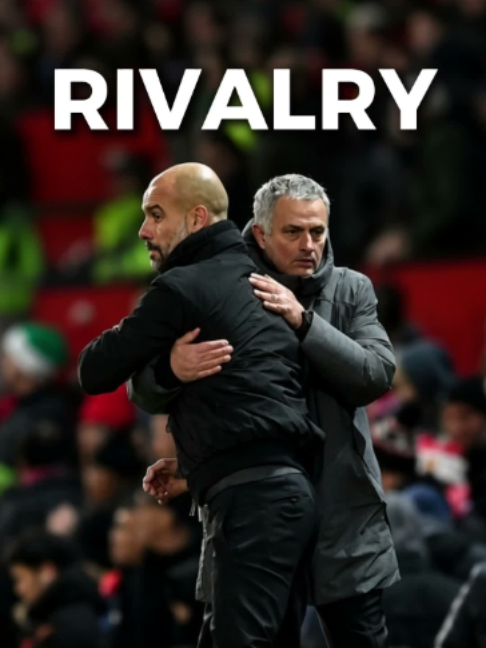
jose mourinho netflix documentary pep guardiola mourinho beef mourinho edit
 Links
Links
 Contact